Should a parking consultant subcontract camera-based parking counts?
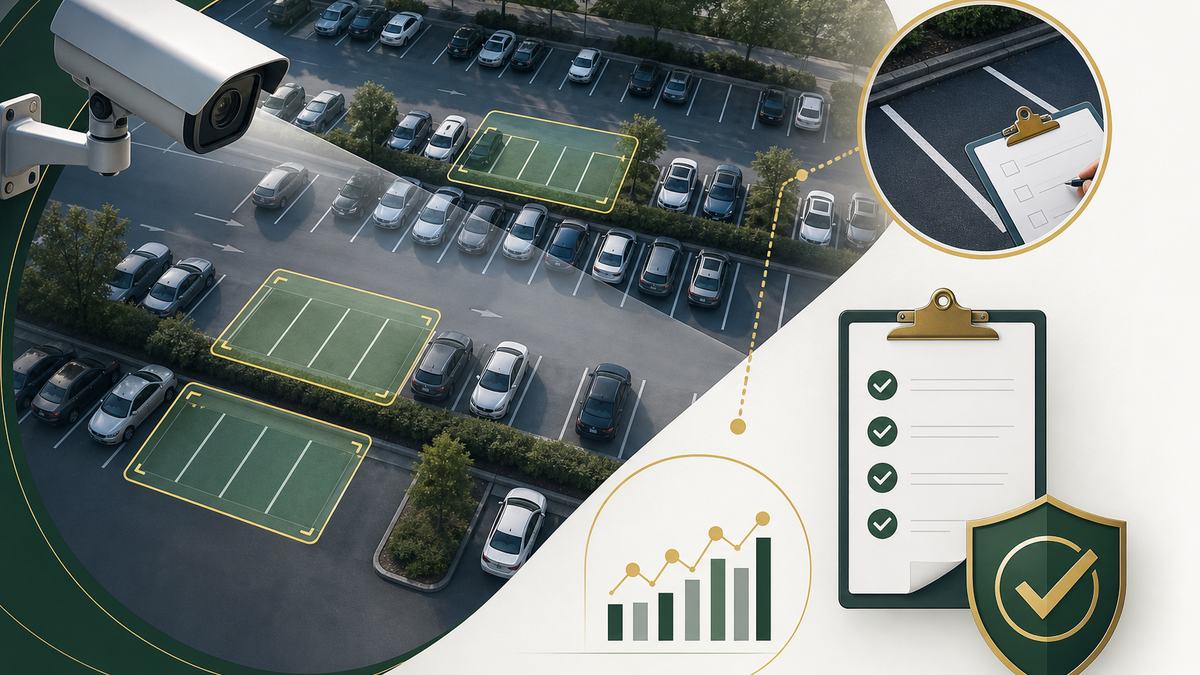
If a parking consultant already has access to fixed camera footage, the real question is not whether someone can count from video. It is whether the count-production layer should stay inside the study team or move to a specialist who can validate the view, reconcile the counts, and hand back evidence the consultant can trust.
That distinction matters because camera-based parking counts are not just someone scrubbing footage and dropping numbers into a spreadsheet. The harder work is deciding whether the view is usable at all, defining the countable zone consistently, separating decision-grade counts from directional-only observations, and documenting where the footage should not be trusted.
Why this is often the right layer to subcontract
A specialist can tell early whether the angle, occlusion, lighting, and visible supply are good enough to support a utilization workflow.
A consultant should get annotated frames and plain-language notes, not just a number with no audit trail.
Reported counts should be checked against hand-reviewed frames before the output gets near a client conclusion.
Senior staff time is usually better spent on recommendations, stakeholder work, and interpretation than count production.
When subcontracting makes sense
Subcontract the camera-count production layer when the client already has fixed footage or exported clips, the study needs occupancy or utilization support rather than live surveillance, and the consultant wants a documented feasibility finding before production and measured, per-zone PASS/WATCH/FAIL QA only after independent hand-review reconciliation.
That last point is the biggest one. A weak camera view can still consume real time. Trees, angle, compression, stacked vehicles, glare, low light, or partial visibility can make a view look promising until someone actually tries to count from it. A specialist screen up front can stop that waste early.
When keeping it in-house still makes sense
Keep it in-house when the team already has a repeatable camera-count workflow, the footage type is familiar and consistently usable, someone on the team owns the validation standard rather than just the count output, and the real labor cost of doing it internally is actually lower than sending it out.
The internal cost is not just a junior staffer opening footage. It includes setup time, false starts on unusable views, spot checks, documentation, revisions, and the opportunity cost of pulling staff into production work that does not improve the study narrative.
What a good subcontractor should hand back
- the study window and footage source used,
- the zones or visible supply being counted,
- interval counts or utilization tables,
- annotated evidence frames,
- hand-check or reconciliation notes,
- a reliability grade for the view, and
- plain-language limits on what the footage can and cannot support.
- The handoff can include count tables, evidence frames, timestamped whole-event clips where events are in scope, combined highlights, a CSV manifest, and decision-ready exhibits.
The practical way to start
The best first step is not a full footage export. It is one screenshot from the camera view. A single still image can usually show whether the footage looks viable, questionable, or not worth pursuing. If the view passes that first screen, a short pilot can test the workflow before the consultant commits more time or the client expects more certainty than the footage can support.
For engineering-led scopes, the newer parking-count subcontract support guide separates footage review, count tables, validation samples, and exhibits from the engineer's responsibility for study design, interpretation, seals, and submissions.
Email the property type, the question the study needs to answer, and the observation windows that matter. Northline will discuss scope and agree on a secure transfer method before requesting any image or video.
Discuss the studyNorthline Data Systems provides fixed-scope, offline parking utilization analysis from existing footage. No live monitoring, identity tracking, plate reading, security surveillance, legal advice, engineering stamp, or traffic-engineering opinion is provided.